
Over the past few months, I’ve been working with one foot planted firmly in the ground of dispute resolution design and the other in the literature of classic fairy tales as I’ve worked at developing a vocabulary that might help bridge the imaginative space between those two fields. Somewhere in that space between literary reflection and dispute resolution practice, these stories have been helping me think about courage, friendship, care, and the difficult art of abiding with and within conflict. What follows belongs to that borderland — part reflection, part applied literature, part meditation on what stories may still teach us about the work of making peace.
Continuity & Context
I’d like to take the opportunity, now, to say more plainly why I have spent so much time in recent field notes in The Imaginative Mediator project wandering among fairy tales, talking about moral imagination, and listening for the moral instruction hidden within children’s stories.
I have not turned to these stories as a return-to-childhood diversion from the practical work of mediation. I have turned to them because they help us see what our professional vocabularies often muffle or leave unnamed. They have helped me to test whether mediation has a moral core at all, and, if so, what sort of core it may be and how it may influence the design of what we build around it. They have helped me to distinguish a peace that merely works from a peace that is real. They have helped me to imagine the presence of truth, care, friendship, and accord before trying to construct a method around them or, worse still, force them into a prefabricated method. They have, in that sense, been vital to my integrated design approach. And now they help me view courage more clearly as well.
For that reason, the turn to courage is not a departure from the earlier notes. It is a continuation of them. It may also bring this particular sequence of reflections to a natural pause, as the project begins to turn more directly toward questions of method.
In my earlier reflections, Pinocchio taught me to distrust false peace: the tidy re-scripting of conflict in a form that soothes without telling the truth. The Velveteen Rabbit helped me think about realness, not merely as private recognition, but as something formed through the giving and receiving of care and widened into community. The camel inheritance story showed me accompaniment in action: the old woman who notices, risks, lends, steps back, and then withdraws at the right moment. Charlotte and the Elder Stag deepened that picture still further by showing that friendship, rightly understood, is not sentimentality. It may be asymmetrical, restrained, exacting, and ordered toward release rather than dependence.
Those stories have not given me a complete theory of mediation. But they have done something theory alone often cannot do. They have made visible the qualities of presence, discernment, and moral formation that mediation language struggles to name. That, I now think, is one reason why moral imagination matters so much. It is not fantasy. It is not mere inventiveness. It is a disciplined way of seeing that is able to inform how we might live together in a shared moral world – in accord.
That point becomes especially important when we arrive at courage.
Courage: Personal Attribute or Moral Demand?
It is common to speak of mediators as requiring certain attributes: attentiveness, professionalism, perseverance, integrity, patience, good communication skills, perhaps even courage. Such lists are not wrong. But these are often treated as though they were items in a job description, or desirable personal qualities one hopes the mediator happens to bring to the room. The qualities associated with mediation are thus transposed from the pre-existing responsibilities, competencies, and professional formation of the mediator’s prior profession – lawyer, engineer, teacher, social worker, manager, therapist, and so on – rather than traced to the moral core of mediation as a distinct practice.
This project has been pressing toward a different view. It is not enough to say, “It is good if the mediator can be…” One must also ask what sort of mediation is being imagined, what moral core it presupposes, and how the process is designed around the virtues that core requires. On that account, courage is not an optional quality added to an otherwise neutral technique. It belongs to a form of practice that asks the mediator to abide truthfully, carefully, and with restraint within conflict, in the hope of movement toward accord.
Courage and Getting Close Enough to See Well
Vigen Guroian, in his discussion of George MacDonald’s The Princess and the Goblin, reminds us that imagination is not chiefly a power to create but a power of discovery. It helps us see into the nature of things. That claim matters deeply for this project. It suggests that the imaginative mediator is not first a manufacturer of win-win outcomes or a technician of interpersonal management. The mediator may be, more fundamentally, a host of inquiry: someone who helps the parties see what is really going on here.
That question has stayed with me because it is not a small question. It is Noel Preston’s question, central to his Ethic of Response. It is also, I suspect, the practical beginning of moral courage.
Courage, in this account, does not begin with dramatic intervention. It begins with perceptive risk. It begins in the willingness to ask the next question, to invite an answer that may put one’s own assumptions at risk, to test values, to reality-test, perhaps even to blind-spot-test, in order that the conflict may be seen more truthfully than before. The courage required here is not bravado. It is the courage of curiosity.
That form of courage may be especially important in mediation because conflict does not usually present itself in its deepest form. What appears first is often rhetoric, story, position, frustration, legal framing, institutional formula, fear, or exhausted repetition. Beneath that surface, however, there may be injury, shame, moral claim, damaged trust, blocked responsibility, distorted care, or a shared world that has become difficult to inhabit. To attend to those deeper realities is to risk unsettling the comfort of the surface account. Yet without that risk, what we call mediation may never reach beyond the management of symptoms.
This is one reason I have found myself increasingly skeptical of models of professionalism that rely too heavily on distance as detachment. From my post-law perspective, the question is no longer only how to remain disciplined, but how to remain present. The answer is not the abolition of all distance. Charlotte in Charlotte’s Web and the Elder Stag in Bambi have taught me that there must still be a distance that preserves discernment, protects the other’s becoming, and prevents accompaniment from collapsing into rescue, collusion, or possession. But it is a different distance from the one I may once have maintained as a lawyer. It is not a protective withdrawal from conflict. It is a disciplined nearness within it.
And that takes courage too.
The Courage to Abide
I have come to think that the greatest demand on courage may not be the courage to act, but the courage to abide.
To abide is harder than it sounds. It is not passivity. It is not indecision. It is not a refusal to move, or to be moved. It is the disciplined willingness to remain present to fear, ambiguity, grief, anger, incompleteness, and uncertainty without fleeing into false reassurance, premature resolution, or moral theatre. It is the courage to stay with truth before truth is convenient; to stay with fear without capitulating to it; to stay with the other without taking over; and to stay with the conflict long enough for something truer to become thinkable.
That is why I now find myself wanting to say that the imaginative mediator is called not merely to abide with the parties, but to abide with and within the conflict as accompanier.
The distinction touches on something important. To abide with the conflict is to refuse denial. It is to let the conflict be real, to hear its claims, to acknowledge its moral weight, and to resist the temptation to treat it merely as a technical problem requiring management. To abide within the conflict is more demanding still. It means entering the charged space of strain, contradiction, fear, and fragmentation without surrendering to its distortions. The accompanier does not stand outside the conflict as a detached analyst. Nor does the accompanier plunge in as partisan champion. The accompanier remains faithfully present within the field so that another way through may become imaginable.
This, I think, is the moral claim that friendship makes.
Courage and Friendship
In earlier notes I suggested that friendship, in the context of mediation, should not be understood chiefly as private affection or emotional intimacy. It is better understood as a moral claim made upon the mediator: a summons not to abandon the parties when the conflict becomes difficult to inhabit, a call to remain, to accompany, to tell the truth with kindness, to carry hope when hope has become difficult for the parties themselves to carry.
That claim is severe. It asks for nearness, but not fusion. It asks for care, but not possession. It asks for guidance, but not domination. It asks for withdrawal at the right moment, but not abandonment. Friendship, in this sense, is not niceness. It is a morally exacting way of standing-with.
And courage is what allows that claim to be answered.
Courage, Fear, and the Thread of Hope
This also helps explain why courage cannot be reduced to the banishment of fear. Guroian is surely right to remind us, through MacDonald, that fear is not simply the opposite of courage. Fear may be a companion of courage, even one of its teachers. To fear for one’s own safety, or for the well-being of others, is not in itself cowardice. It is often the reasonable response of a relational being to what threatens those relationships. The question is not whether fear will enter the room. It will. The question is whether fear will rule the room.
Hope, I have written elsewhere, is a risk that we take together. I think I now see more clearly that courage is what allows that risk to be taken. It allows fear to enter without allowing fear to become sovereign. It permits us to hope without sentimentality. It keeps the process from collapsing either into fantasy on the one hand or fatalism on the other.
That is where the image of the thread becomes so important for me.
In Guroian’s reading of The Princess and the Goblin, the Princess Irene is given a fine, almost impossible thread, which she must trust even when she cannot fully explain it and others cannot see it. I have found myself increasingly drawn to that image because it seems to name something essential in the kind of mediation I am trying to describe.
The thread is slight. It can be doubted. It is not always visible. It does not offer certainty. Yet it may still be trustworthy.
And perhaps that is not the only image we need to help us appreciate the pull of that thread. In C. S. Lewis’s Prince Caspian, the Pevensie children suddenly feel what Edmund calls “a strange pulling sensation” and, with urgency, reach for one another as Edmund announces, “This is magic — I can tell by the feeling.” I have long been drawn to that language of “pull”. From a post-law perspective, I have often remarked that our work is less about the push of compliance than about the pull of community, the pull of accord, the pull of a shared moral world becoming faintly, insistently, and even dangerously felt again.
Courage and the Pull Toward Accord
For this project, I want to suggest that the thread may stand for the integrative quality of mediation that builds toward accord. Earlier notes on accord-building mediation have argued that accord is not simply compromise, still less a sentimental harmony. It is not a midpoint between opposed positions. It is better understood as a kind of integrative pull within the conflict field: a movement toward greater intelligibility, responsibility, competence, responsiveness, and practical alignment around the work that now needs to be done.
But that pull is not always dramatic. In some settings it is very slight indeed.
This becomes especially apparent in administrative conflict, and perhaps most clearly in discretionary redress work. In administrative pathways such as the CDDA scheme or the Act of Grace Payments scheme, reciprocity may be thin. The opening may be narrow. The institution does not cease to be an institution. The scheme does not guarantee repair. What exists, at times, is only a slim lawful opening: not a promise of redress, but the possibility that what appears closed may not be final.
To work within such a field requires courage of a particular kind. Not the courage of public heroics or committed activism. Not the courage of righteous denunciation. But the courage to hold the opening without romanticism, without false reassurance, and without surrender to fatalism. It requires one to remain truthful about asymmetry, institutional limit, and uncertainty, while still protecting the possibility that some more fitting, more answerable, more care-shaped movement may yet become possible.
A Type of Magic after All?
Seen in that light, the fairy tales and the administrative applications which I have been exploring no longer seem so far apart from each other. The stories have taught me how to recognise the thread. The work on accord taught me to think about the pull that thread exerts within a conflict field. The CDDA and AoGP work now ask what it means to follow that thread through the damaged and often thinly reciprocal worlds of public administration.
That is why I have been writing about fairy tales and moral imagination.
Not because practical mediation can be replaced by allegory. It cannot. Not because public conflict can be healed by enchantment alone. It cannot. But because stories help us see what we might otherwise learn too slowly and too expensively. They show us how truth can be lost beneath a plausible narrative, how care can make something real, how accompaniment may require risk, how friendship may demand restraint, how courage may mean patience, and how a nearly invisible thread may still be trusted when the way ahead is obscure.
Courage, then, as the imaginative mediator must learn it, is not the courage to conquer conflict or to escape it. It is not even, in the first place, the courage to solve it. It is the courage to abide with and within conflict as accompanier: to see truthfully, to remain present without possession, to keep faith with the thread toward accord, and to do so without coercion, without collapse, and without abandonment.
That is a more intimate courage than many traditions of professional life are inclined to honour. I am beginning to suspect that it is among the most necessary.
Andrew C. Wood
References
Guroian, Vigen, 2023, Tending the Heart of Virtue: How Classic Stories Awaken a Child’s Moral Imagination (Oxford University Press) (Kindle ed).
Lewis, C. S., 1951, Prince Caspian, 1998, Harper Collins, Hammersmith, U.K.
MacDonald, George, 1872, The Princess and the Goblin, 1984, Puffin Classics, Hammondsworth, U.K.
Preston, Noel, 1996, Understanding Ethics, The Federation Press, Leichardt, NSW.
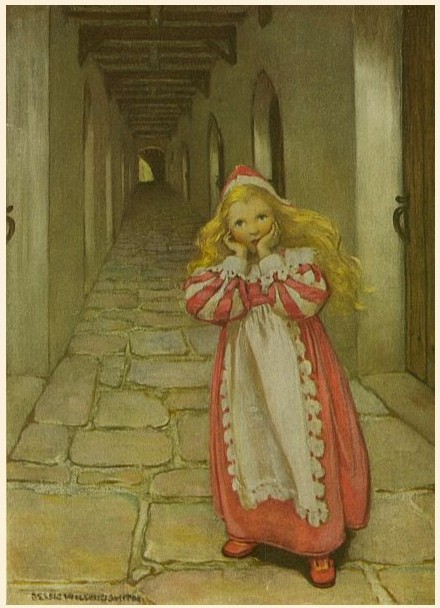
MacDonald, George (2017-07-03T22:58:59.000). The Complete Works of George MacDonald (Illustrated Edition): Enriched edition. The Princess and the Goblin, Musaicum Books. Kindle Edition.

 Sunburnt Speculations
Leave a comment